

A question mark-shaped heart
How learning to be a journalist taught me a different way to approach my neighbor

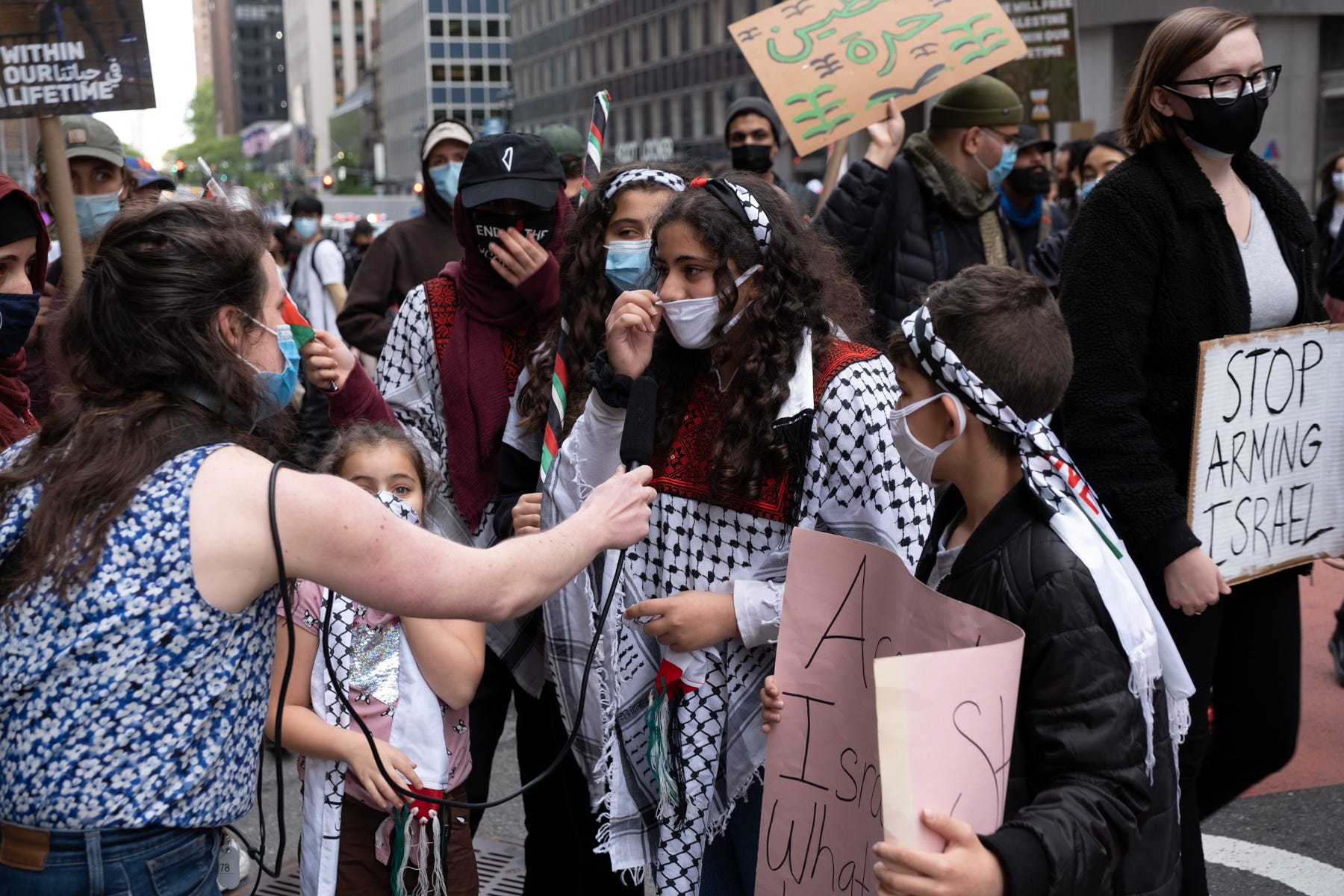
My first article for the now-shuttered Grotto Network, a project of the University of Notre Dame, was about the practice of asking questions— how my formation as a journalist taught me to keep quiet and let other people talk—even if I already thought I had figured out the answer 10 minutes ago, even if I felt like I could predict everything they could say.
Journalism has taught me—and continues to teach me—that it is better to be amazed than proved right. It is truly better to listen and absorb and wonder than it is to say “I told you so” or “I already knew that.” We Roden women prize ourselves on our intelligence, on having the right answer, on getting there first and moving onto the next thing quickly. Journalism taught me to slow down, to be okay with getting things wrong and being told otherwise.
It taught me to shape myself into a question mark rather than an exclamation point. We know that asking is an important part of an encounter with an other, an important way of greeting another person—“How are you?” is point two of our standard American greeting. But we don’t often think about what it really means to let that question sink into our way of being, to really ask, to really be open to hearing an answer.
So here’s what I had learned about question-asking, from the perspective of April 2021:
This past fall, in the middle of a pandemic, I started a graduate program in journalism. Even if you’re not a close follower of the news, you may have picked up on the fact that journalism is not a particularly lucrative profession at the moment. And you may have gathered that the past four years have only heightened divisions over standards of journalistic objectivity and fairness in the “mainstream media.”
What is journalism good for? It’s a question I ask myself fairly frequently.
A journalism degree is a professional degree, but it’s not a necessary gatekeeper to the profession — like law or medicine. Basically, it’s unnecessary. Journalism is something anyone with a pen and paper can do. And that’s kind of the point. Reporting is a form of democratic storytelling — at its most fundamental, it’s the idea that anyone can see something, get two sources — “both sides of the story” — and then publish their findings. It’s a form of storytelling and record-keeping in which the community tells its own story.
Over the past year, my studies have felt less like education and more like formation — how to develop a journalist’s habits of being. And those habits, I’ve found, are primarily cultivating an openness toward who and what is around you. One of its most basic — and effective — exercises is the interview.
The first time I attempted to interview someone on the street, I nearly chickened out.
It was last June, as I was breaking in my reporter’s sea legs by interning at a local neighborhood news outlet. My first assignment: covering a protest in Times Square.
Surrounded by a crowd of people for the first time since February, I just couldn’t bring myself to approach a stranger. The idea of going up and talking to someone violated all the habits of social distancing I’d been practicing. And general New York City street etiquette strongly discourages it.
Plus, I have this deeply rooted fear of rejection. What if I ask someone if I can talk to them and they say no? Being told no feels devastating, even in a relationship as transitory as an interview. So yeah, I was scared.
As I was about to retreat, my friend Kevin nudged me toward a line of protestors. Armed with a pen and notepad, I made my way to a woman on the outskirts. I don’t even remember if I introduced myself.
Walking away after finishing the world’s shortest interview, I felt a surge of adrenaline. It seemed like magic that I could ask someone for their name, permission to ask a few questions, and they would just give away a story to me.
Interviewing is vulnerable — and often means getting rebuffed. People tell you no a lot. But one gift interviewing has given me is the practice of asking questions. Asking more questions has borne fruit not only in my reporting, but also in my relationships.
I’ve not always been good at asking questions. I like providing answers more than asking for them. But relationships are fueled by asking questions — asking them together and asking them of each other. The more questions asked, the more relationship to discover.
Asking questions is hard. It’s a practice of bravery. The answer to a question may be something you don’t want to hear, something that challenges the narrative you had. It may implicate you. It may mean you now have fewer answers and a whole new set of questions to ask.
Ask a friend, Have I hurt you? Pause to greet the panhandler on the street: How are you? Or say to a family member, Why do you think that? — and you may hear things you aren’t ready for. Asking questions draws me out of my own certainty into uncertainty.
And being uncertain doesn’t feel good. It often makes me feel weak. Uncertainty reveals me as someone who needs other people and doesn’t have all the answers contained neatly within myself. I can’t simply rely on my own experience to tell the story. Practicing journalism over this year has reminded me over and over again that I need others to tell my own story — or any story.
There’s a lot of things journalism can’t do — it can’t tell you what existence is. It can’t describe the goal of a human life. It can’t create a shared set of values or beliefs. As a craft, it has its limitations. But I think journalism, like philosophy, is a mode of encountering reality and seeking wisdom.
To be wise means to see the world for what it is — what it truly is, not what I wish it to be, or even what I see it as. To see the world for what it is means discovering it as made of many things beyond my own vision and hidden from my sight. The more we acknowledge our own blindness, the closer we are to seeing the whole — so long as my blindness prompts me to ask my neighbor what she sees.
Asking questions is an invitation to my neighbor — my partner, my roommate, my sister — to teach me what the story is. Questions invite us to build our stories with people. They are a reminder to include the narratives of others in our own narrative.
Asking questions gives flesh to my belief that I do not have a monopoly on truth. Questions open my eyes to a greater vision of truth, one built on continually opening myself up to relationship — even if it’s vulnerable, even if I’m scared. A question is the first step of a journey of opening myself to more sides of the story — to expand my own story to include the many tales of others. To be a human is to be made up of many stories.
Sweet Unrest in the Streets
“The Culture that Still Consumes Women,” Verily Magazine
I wrote about Reading Virginia Guiffre and the Epstein files for Verily Magazine. Reading about Epstein is sickening. That nauseating feeling of disgust reminds me, as I write for Verily, of watching Louis Theroux’s new Netflix documentary about the Andrew Tate wannabes that populate the internet, pimping out women’s bodies for their own profit:
In Into the Manosphere, Theroux presses Sullivan on why he is willing to make money off these women’s bodies if he thinks that what they do is wrong: “Wouldn’t it be easier just to do the right thing? To try to be good?” he asks. Sullivan is nonplussed. Clearly no one has challenged him on this new spiritual plane he ignores: the plane of right and wrong, morality, virtue. It seems that for most of his day, he focuses on the material: his muscles, his diet, his cars, his houses, his views, sex. Theroux introduces a spiritual concern: goodness. What does it mean to be a good person? Sullivan’s conscience—the muscle that discerns goodness and virtue seems to have atrophied.
One can recognize this atrophied conscience in spades throughout the Epstein files. He has drowned the spiritual in the bacchanalia of sensuality he engorges on each day. Anne Enright, in a masterful grappling with the scale of Epstein’s sins for the New York Review of Books, examines just one day in the life of Jeffrey Epstein—the wealth, the carnality, the hedonistic carelessness and venal lasciviousness.
Read on Verily Magazine’s website here.
“In Praise of,” Jesuit Media Lab
I am endlessly delighted that our Lenten project of praise is available for purchase in a book format. The artwork by Erin Buckley and Allison Beyer is a joyful, whimsical psalm of whirling color, and the arcitecht of this magical little project, Cameron Bellm, pulled together a tapestry of praise for the minor and the significant: in praise of talking to yourself, the power of a garden fence to protect lilacs from maurauding deer, in praise of pesto, dinosaur suits, embracing a morning of surprise—it’s all sacred, it’s all praise-worthy here.
Purchase the E-Book of Praise here.
Mr. Brown’s Bylines
—Pieces from good friends, and from writers whose words have been a friend to me—
“Brown, who is always one’s friend in a disaster, applied a leech to the eyelid, and there is no inflammation this morning though the ball hit me on the sight.”
John Keats to George & Georgiana Keats, May 1819
Patty Breen McNeil, “My Annulment Was Healing. I Still Think the Process Is Unnecessary,” Busted Halo
I have read Patty’s personal reflections on annulments for a long time, and I so appreciated the recent addition to her personal canon with this first-person essay for Busted Halo (shout out to Jennifer Sawyer, their fabulous editor) on her evolving perceptions of this canonical process. An example of Patty’s careful, empathetic reporting from the trenches as an annulment advocate for lay persons going through the process:
Another woman I worked with needed two annulments before entering the Church. She was willing and did it, but I also saw the pain that resurfaced as she had to relive trauma from these previous marriages. I think the process itself creates a lot of hoops for people, and I sometimes wonder if it is right for such a process to work this way, when we don’t have something similar for people who have received sacraments in other mainline denominations. Previous marriages and divorce come with the most complex sacramental and canonical issues to work through, which I think is why many Catholics do not pursue the annulment process.
Dana Ray, “The Pulsing Life of the Finished Work: An Interview with Stephanie Duncan Smith,” Naming Blue
My fellow Harrisburg transplant Stephanie Duncan Smith writes a beautiful Substack on craft, Slant Letter. She often features examples from her lovely book Even After Everything, which you can quote me on, is “Madeleine L’Engle’s The Irrational Season for the twenty-first century mother.”
I loved this interview with Stephanie on Naming Blue about creativity within, above, throughout, beyond the written word itself. Writing is, as Stephanie says, a miniature cosmos of our own interior habits, “As in writing, as in life”:
Or as in writing, as in life, as in faith. (And I could add, as in parenting!). It’s all cut from the same cloth. The process itself is the spiritual practice, and we become who we’re meant to be—we become more human. We become more of our authentic selves through the stretching that happens in the process, whether that’s the writing process, or the life process or the faith process or the parenting process. There’s no hacks; there’s no shortcuts. There’s only engaging what’s right in front of you while finding an honest way through and staying with yourself. And all of those things are hard and all of those things stretch us. And they can form us in really profound ways. And at the end of that process, if we stick it through, I think we find we’re also proud of ourselves. And that’s rewarding.
Read more:

Nancy Fitzgerald, “Catholic Workers Wear Homemade Ankle Monitors,” National Catholic Reporter
Grateful for Nancy Fitzgerald’s story about our “ankle monitor” Lenten practice.
So Renée Roden, a community member of Harrisburg’s St. Martin de Porres Catholic Worker, cobbled together faux ankle bracelets from strips of Velcro, super glue and small plastic boxes with rosary beads tucked inside. Now they’re being worn to work, to Mass, even to the airport by local Catholics as an act of solidarity with their migrant sisters and brothers. “When we wear these, especially during Lent and even Holy Week,” explains Roden, “we’re echoing what Jesus did during his entire ministry. We’re standing up against injustice. We are carrying the cross with Jesus.”
Read more at National Catholic Reporter.
Bonus: Read a Theatre Classic With Me!
I’ve written about the Zoom theatre retreats I run for Jesuit Media Lab before, and, in May, we’ll be reading Arcadia over two days. If you’ve never read Tom Stoppard’s calculus-driven drama, you’re in for a treat. It’s my strongest visual association with the word “entropy.” You don’t want to miss it.
Pay what you can!
Love this: "Asking questions is an invitation to my neighbor to teach me what the story is."
Also: yay Hbg! I'm here too :-)
Thank you for sharing my essay, friend!💜☺️